
Cedar City Directories by Source
Cedar City people directories do not form one master list. Each keeper publishes names for a defined reason. City and school directories identify public contacts. County land systems list owners and parties to recorded documents. State tools identify employees, licensed professionals, and registered organizations. Historical sources capture people whose current contact details no longer appear online.
| Directory source | Names it identifies | Keeper | How to use it |
|---|---|---|---|
| Cedar City staff | Municipal staff and departments | Cedar City | Free name or category search |
| Iron District staff | District and school employees | Iron County School District | Free name and department filter |
| Utah State Phone Directory | State employees | State of Utah | First and last name required |
| EagleWeb | Owners, grantors, and grantees | Iron County | Free account and document index |
| Construction Business Registry | Active, opted-in licensees | Utah DOPL | Profession and location filters |
| Local history collections | Past residents, families, and civic participants | Library, Archives, and SUU | Online discovery plus onsite material |
Start with the directory that matches the person’s role. A city title belongs in the municipal staff search. A school department belongs in the district list. An owner name or parcel belongs in EagleWeb. A person connected to early Cedar City may be easier to locate in a newspaper, cemetery record, course catalog, or family manuscript than in any current phone list.
Cedar City Staff Directory Fields
The Cedar City staff directory supports both discovery and direct name searches. Choose a category when the department is known but the staff member is not. Enter first and last names when the person is known. JavaScript must be enabled. Department pages also publish main numbers, which provide a practical fallback when an individual entry is absent.
| Search control | What it does | Required |
|---|---|---|
| Category | Limits results to a city department | No |
| First Name | Matches the given name in a staff entry | No |
| Last Name | Matches the family name in a staff entry | No |
| Search | Runs the selected filters | Action |
The live city directory view shows how Cedar City groups public contacts.
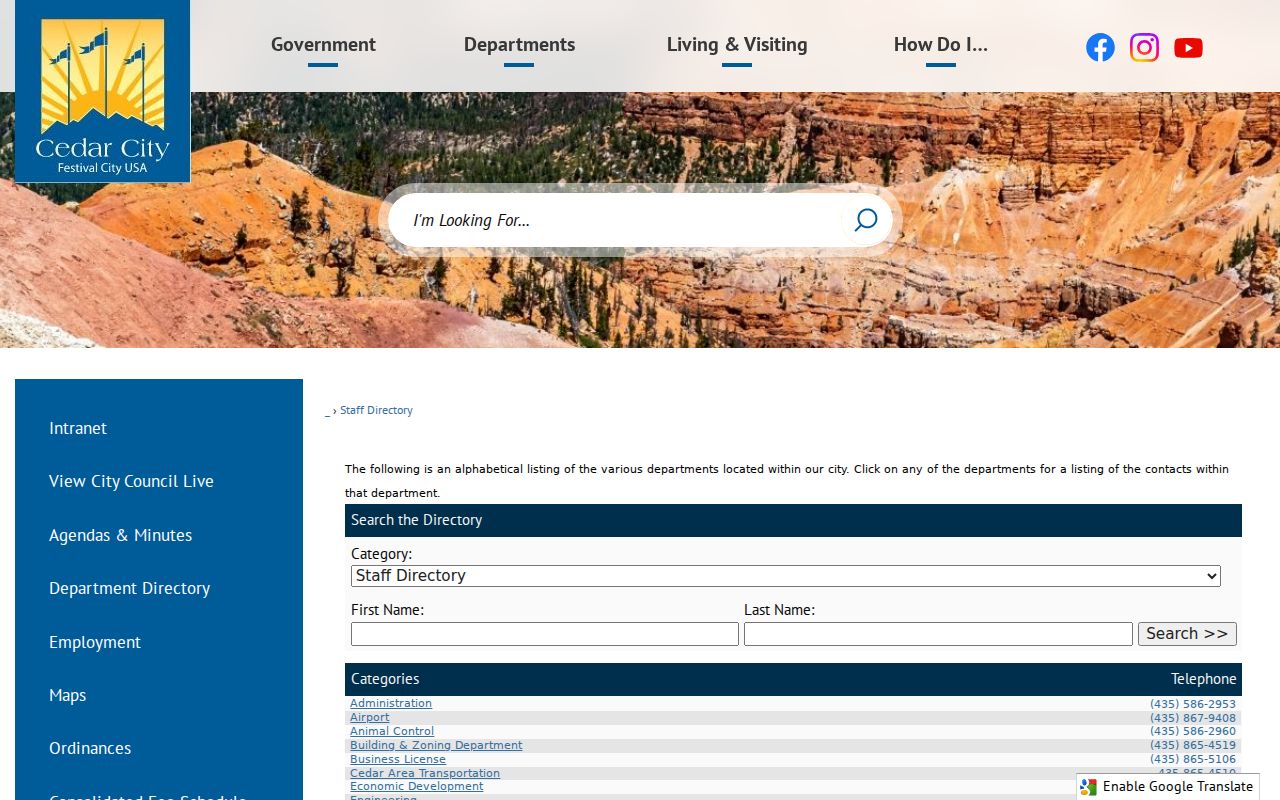
A result can show a staff name, title, email, work phone, extra phone, department address, and office hours. Those are official contact details. They should not be read as home addresses or personal phone numbers.
Cedar City Government Directory Routes
Government directories widen beyond City Hall. Iron County’s contact pages identify elected officers and department heads, but they are not a full employee index. The county list is valuable for routing a question to the right keeper. The Recorder and Clerk are in Parowan, while some county offices, including the Assessor, also have Cedar City locations. The Iron County Clerk handles elections and marriage licenses; it is not the clerk of the courts.
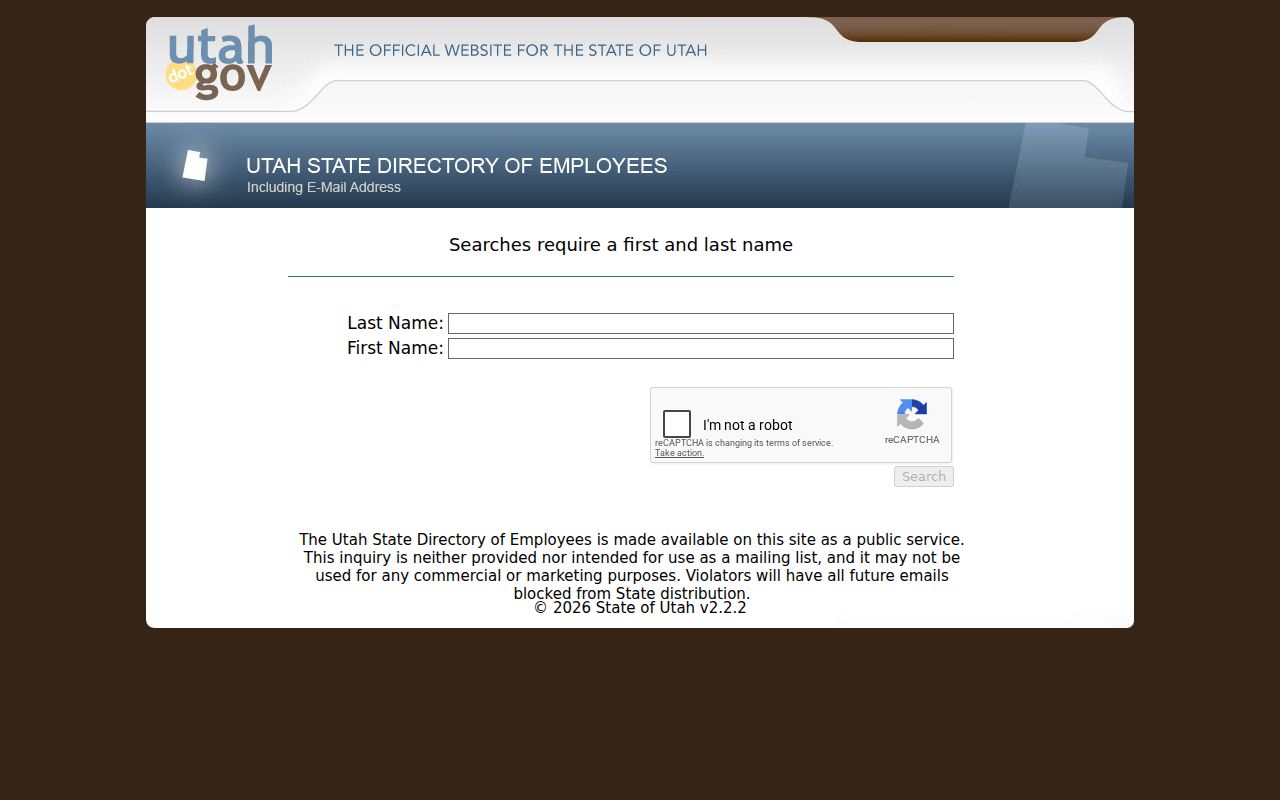
The Utah State Phone Directory requires both a first and last name. That makes it precise but weak for browsing a surname. Transparent Utah accepts a partial legal name and adds year, entity, employee, and role filters, though its compensation data are raw and may not be consolidated. A nickname may fail when the record uses the person’s legal name.
The state directory’s public search screen illustrates that exact-name approach.
Use state tools for a state role, county contacts for an Iron County office, and the city directory for municipal work. None is a list of all residents.
Directory limit. A public work address identifies an official role. It does not establish where that person lives.
Cedar City School Directory Search
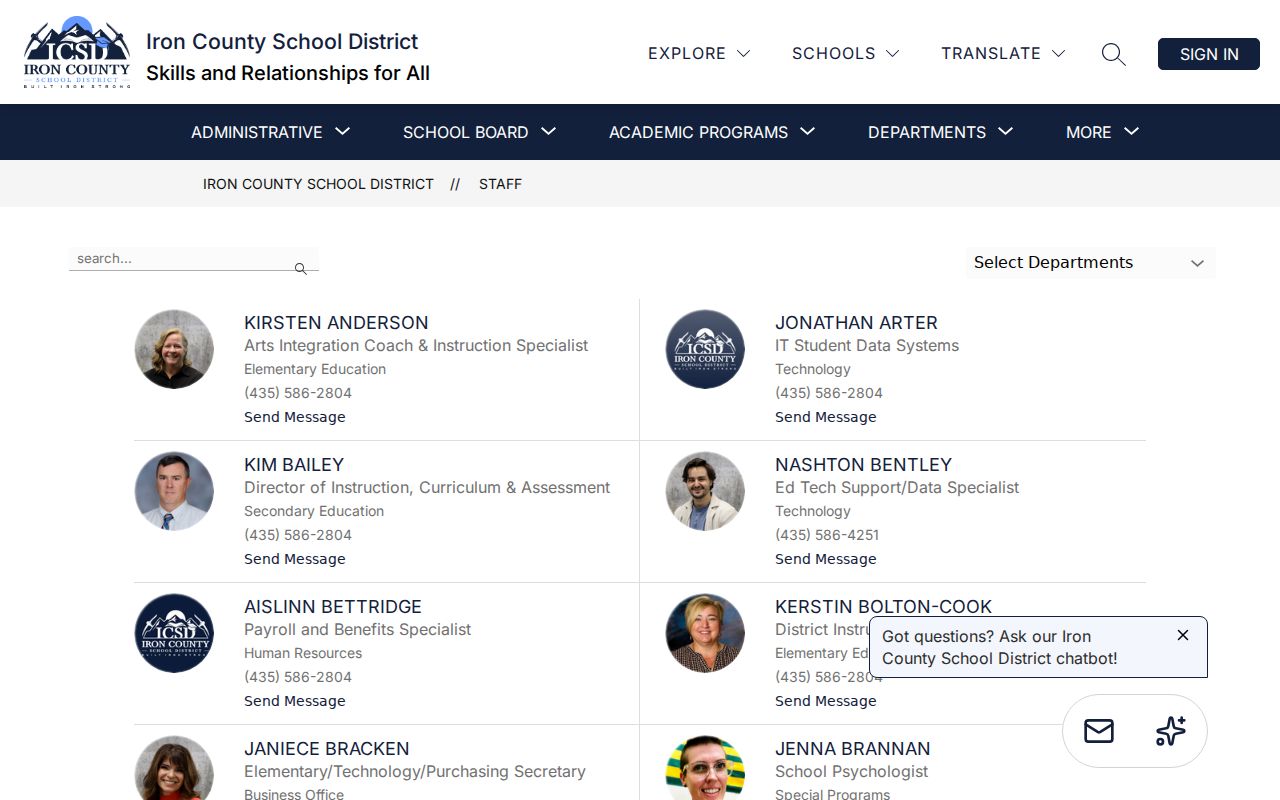
The Iron County School District staff directory is the strongest verified live education search for Cedar City. It accepts a name and a department selection. Staff cards can show a photo, full name, position title, department, phone, and a Send Message control. The message button lets the district shield a direct email address where it chooses.
The district’s staff-card display gives a clear view of the fields tied to each public role.
This is a personnel contact directory, not a student, parent, or alumni list. Browse by department when the spelling is uncertain. Southern Utah University’s current live staff form could not be verified, so its Digital Library is best treated as a historical institutional source rather than a substitute current directory.
Note: A position title and district phone help confirm a public role, but neither field supplies a private contact channel.
Cedar City Business Name Directories
Business and professional directories answer different questions. Utah’s business portal searches registered entities. The DOPL license lookup checks professional credentials. The Chamber directory publishes organization details and named public contacts, but its exact current URL was not verified. A registered agent, a license holder, and a chamber contact may be three different people, so keep each role attached to its source.
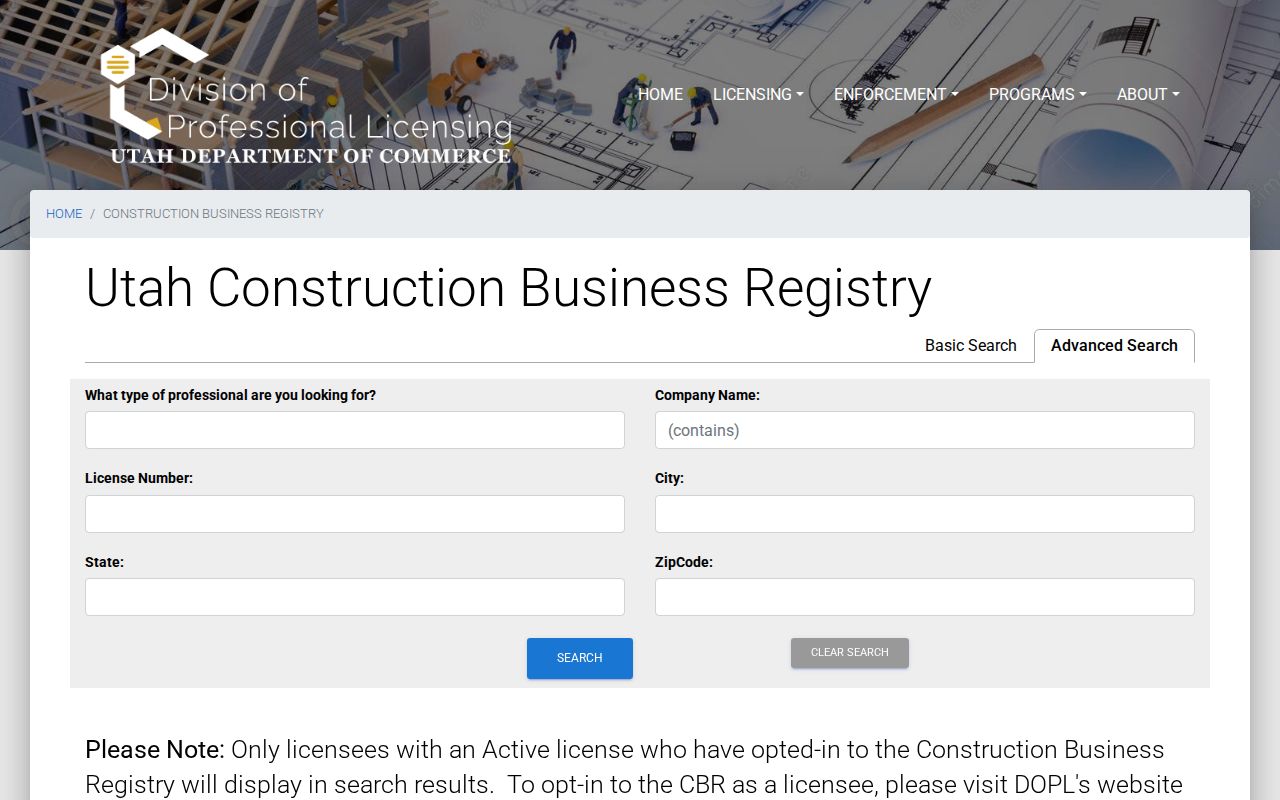
The Construction Business Registry offers basic and advanced filters for professional type, classification or scope, trade type, company text, license number, city, state, and ZIP. It shows active licensees who opted in, not every licensed person or business. The registry is therefore useful positive evidence, but an absent name does not prove that no license exists.
The registry’s search form shows the trade and location controls available for a Cedar City directory query.
For a local business-license register that is not online, the Cedar City Business License desk can be asked for a specific existing record. The full request process belongs with Cedar City public records access. Do not ask the office to create a profile or decide who operates a business now.
Cedar City Property Owner Directories
Iron County EagleWeb works as two related name directories. Account Search ties an owner to a parcel, mailing address, situs address, legal description, value, taxes, and property class. Situs means the physical property location. The mailing address is where the tax notice goes. They can differ, and neither proves that the owner occupies the parcel.
Document Search indexes grantors and grantees, the parties who transfer property, along with entry number, book and page, parcel, dates, legal description, subdivision, and document type. A deed party may have sold the property years ago. Search the parcel and recording sequence before treating a name as current. The index is free, but recorded images must be obtained from the Recorder counter in Parowan.
- Owner
- The person or entity shown on the current assessment account.
- Situs address
- The location assigned to the property itself.
- Mailing address
- The destination for tax notices, which may be outside Cedar City.
- Grantor and grantee
- The party giving and the party receiving an interest in a recorded transfer.
Iron County GIS adds municipal boundary, zoning, lot, block, district, owner, and mailing fields. That boundary check matters because a Cedar City postal address can sit outside city limits. The county remains the land-record keeper either way.
Cedar City Newspaper Name Directory
The Cedar City filter in Utah Digital Newspapers returned 5,895 results during research. The group included Iron County News, Iron County Record, and SUU student papers. Search controls include text, advanced options, a year range, and city, county, language, and newspaper facets. Results identify the paper, date, page, article title, and item type.
This large corpus acts like a community directory across time. Obituaries tie relatives together. Social notes connect married and birth names. Legal notices can identify estates, parcels, and court matters. School and civic reports preserve affiliations that never reached a formal city directory. Optical character recognition can miss a damaged or stylized name, so try initials, spouse wording, an address, an organization, and a narrow date range. Always inspect the page image.
Cedar City Cemetery Record Directories
Cedar City’s cemetery files form several directories rather than one list. Burial cards cover 1858 through 1992, the interment register covers 1860 through 1979, deeds run from 1900 onward, lot files cover 1904 through 1991, and an owner index covers 1950 through 1988. The city also keeps current cemetery records, while plats and certified burial-right transcripts create a second trail at the Iron County Recorder.
A deceased person, a lot purchaser, and a burial-right holder are not always the same person. Match the lot, dates, deed, and interment entry before joining the names. The 1902 surveyor’s map is unusually useful because it connects streets, blocks, lots, property owners, township and range sections, and the cemetery inset on one official artifact.
The Cedar City Library’s Local People, Places and Events collection adds family manuscripts and Iron County Memories oral histories.
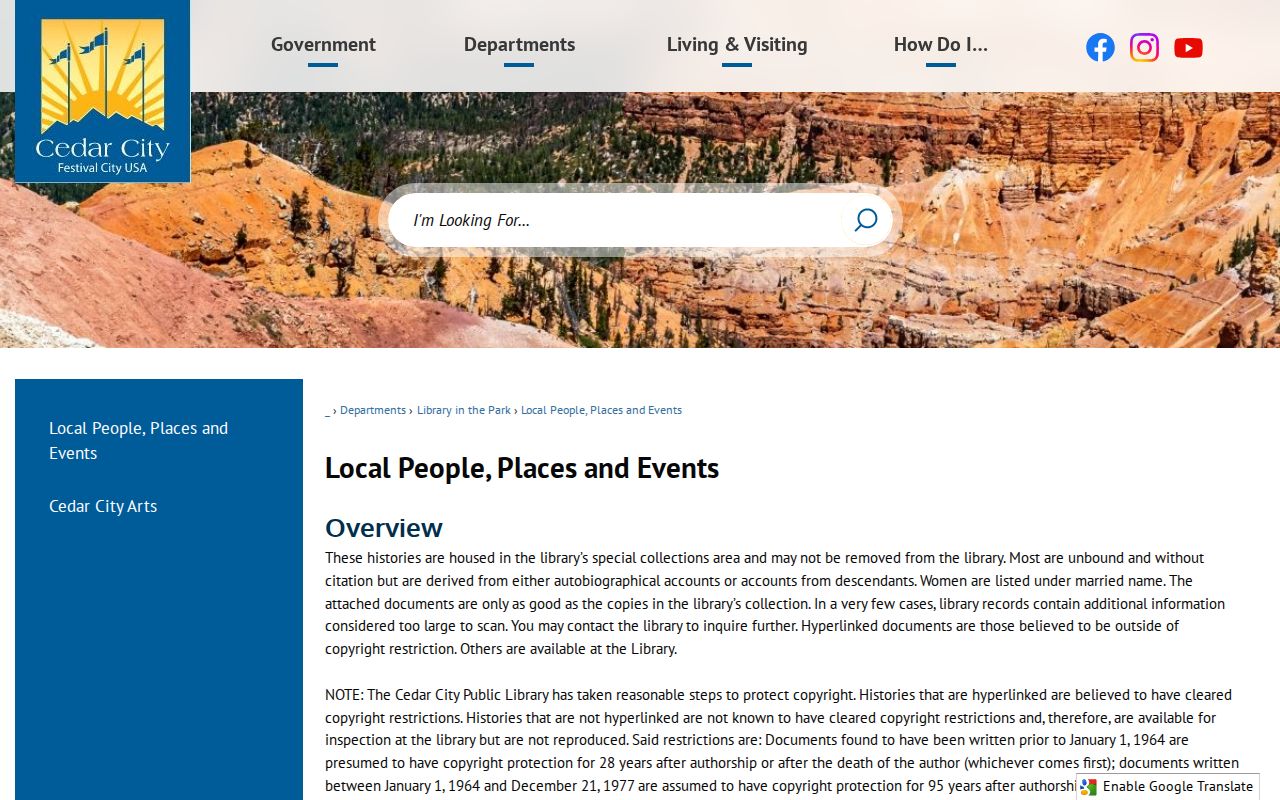
Some local histories cannot leave special collections, and copyrighted items may be available only onsite. Call the reference desk before assuming that an item can be copied.
Trace Cedar City Historical Directories
No authoritative shelf list established the exact years of Cedar City printed, reverse, or telephone directories. That gap should shape the request. Ask library staff about the target year and the exact source type: city directory, telephone book, criss-cross directory, county history index, obituary index, yearbook, newspaper microfilm, or a licensed database. Also ask whether the item is in special collections and whether a remote name or address check is possible.
Cedar City Library
303 N 100 E
435-586-6661
Local histories, personal and family manuscripts, and onsite special-collection material.
SUU Special Collections
435-586-7945
specialcollections@suu.edu
Course catalogs, programs, student papers, media, and regional collections.
When no printed directory exists for a year, combine a period census, local newspapers, SUU catalogs, cemetery records, deed indexes, court registers, and birth or marriage registers. Each covers a different slice of Cedar City. Owners, public employees, litigants, licensees, and newspaper subjects are not a complete resident list.
Cedar City Directory Geography
Cedar City occupied three town sites. Settlers arrived in 1851, moved for security in 1853, and moved again to the present surveyed site in 1855 after leaving the Coal Creek floodplain. Interstate 15 now cuts through the old fort area. An early lot reference therefore cannot be forced onto the modern street grid without checking the town-site context.
The city’s later railroad era adds another directory layer. The railroad arrived in 1923 and passenger service ended in 1959. Newspapers, census entries, depot records, photographs, and university material can place workers and visitors within that span. Preserve the date and the spelling of every address. Growth and annexation can shift a parcel’s city status even though Iron County continues to hold its deed and assessment trail.
Verify Cedar City Directory Entries
A directory entry proves only what its keeper records. Staff directories show public roles. EagleWeb shows ownership and filing roles. A chamber listing is a self-presented business contact. A cemetery owner index concerns burial rights. A newspaper search result points to a page that must be read in context. Keep the source date, record role, and exact name spelling with every result.
- Record the directory name, search terms, and access date.
- Read the field label before deciding what an address or role means.
- Check a second source from the same period when identity is uncertain.
- Use name variants, initials, and date filters instead of forcing a weak match.
- Contact the keeper when the online directory stops short of the underlying record.
That discipline is most important in a fast-growing city. A current directory can become stale quickly, while an old address may belong to a different parcel shape or street context today.